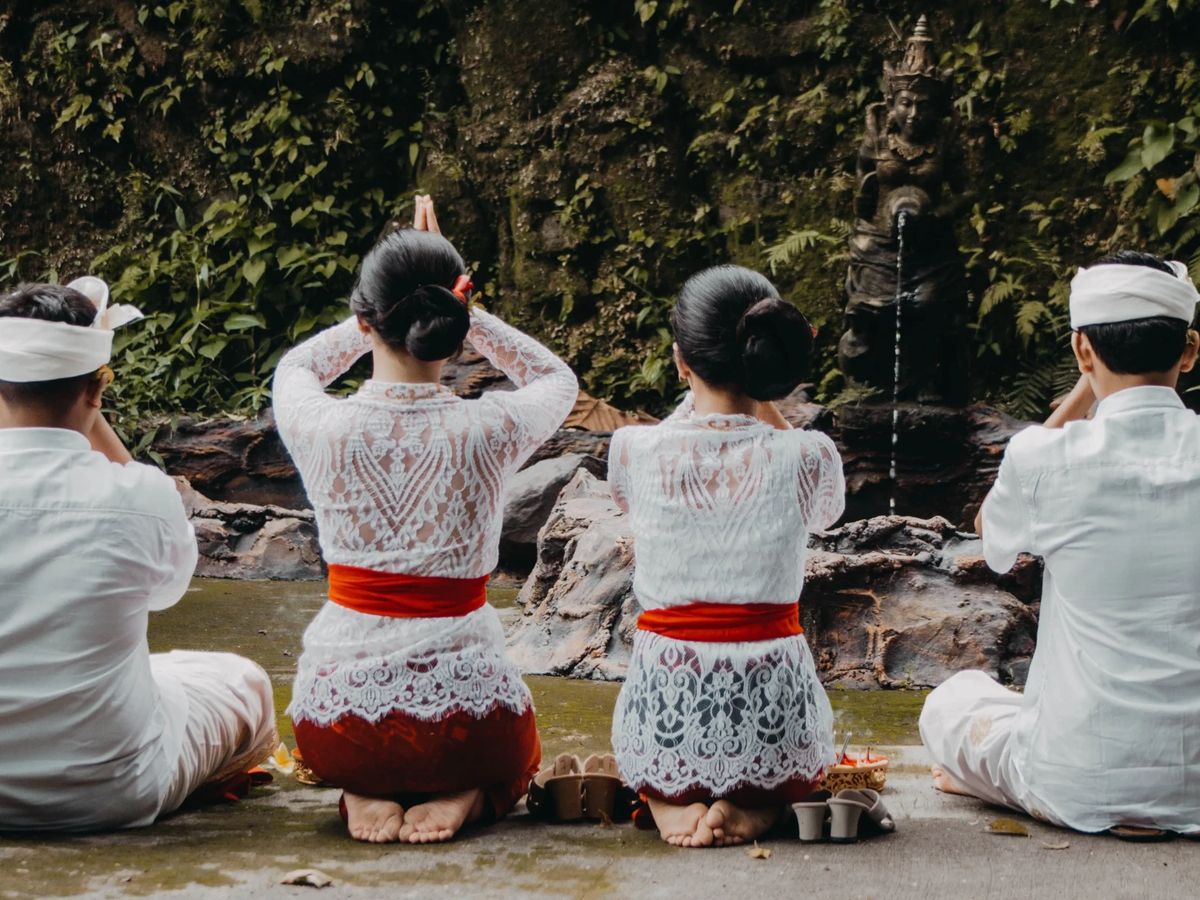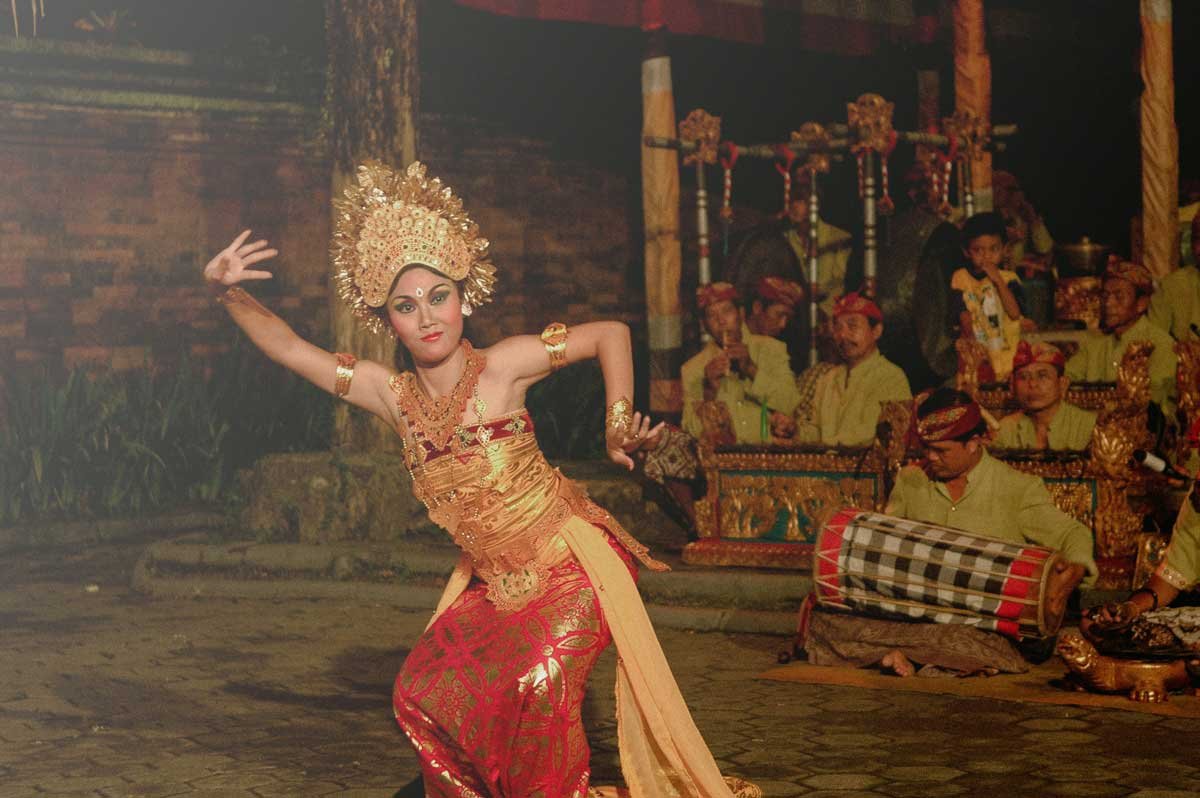
Balinese Hinduism is a living faith you'll see everywhere, from daily offerings on the pavement to temple ceremonies in the village. You don't need to know much to be a good guest. Learn a few basics, dress respectfully at temples, and watch without interrupting.
What are the daily offerings, canang sari?
Every morning, you'll see small woven palm-leaf trays filled with flowers, rice and incense, placed outside homes, shops and temples. These are canang sari, offerings of thanks to the gods. They're usually made fresh each day, and they sit on the ground too, so watch your step. If you step on one by accident, don't worry, but try to walk around them.There's another daily offering called saiban, made after cooking. It's usually a small portion of rice offered in thanks for the meal, often placed in a few spots in the home or the shop.
What are the main temples and ceremonies?
Each temple holds a ceremony called odalan, its anniversary, on a 210-day cycle in the old Balinese calendar, so about every six months. Smaller ones last around three days. Much bigger ceremonies, such as Ngenteg Linggih, come only every few decades, when the gods are settled in the temple again.For many Balinese, seeing one is a blessing. The rarest is Eka Dasa Rudra at Besakih, the mother temple, held once every 100 years and last held in 1979. Before any ceremony, the village community goes to the temple a few days early to prepare offerings, and the symbols of the gods are set out so everyone can pray.
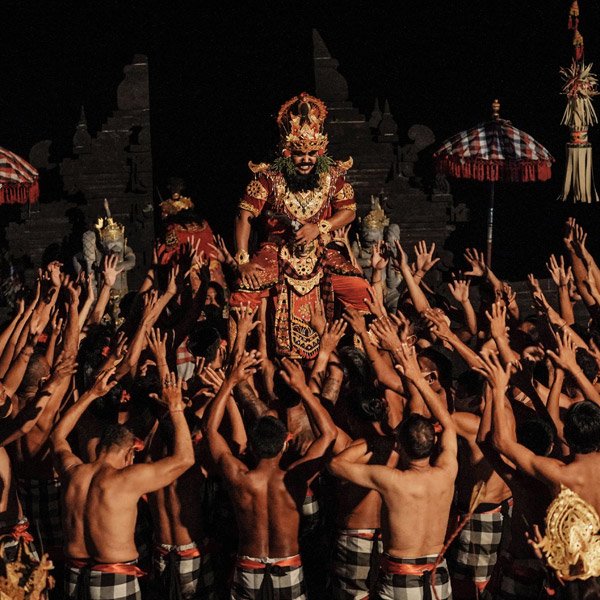
If a big ceremony like Ngenteg Linggih happens while you're staying in Ubud, you're lucky. It could be one of the best experiences of your trip, because the whole community gives its all as an offering to the gods. You'll see solidarity and togetherness, hear gamelan, and watch parades and traditional culture up close. Watch from the side and follow what locals do.
How should you dress and behave at temples?
Wear a sarong and sash at temples, and cover your shoulders and knees. Many temples lend or rent them at the entrance for a small fee. Walk quietly and don't climb on shrines or walls.For Balinese people, a woman does not enter the temple during her menstruation, even during a big ceremony, and this applies at every temple. It's our tradition, and visitors are asked to respect it too. For the full rules, see our temple etiquette guide.
What are the main beliefs in a nutshell?
Balinese Hinduism is often described as blending Hindu ideas with older island traditions. At its heart is balance, or Tri Hita Karana: harmony between people, nature and the divine. You'll also hear about karma, rebirth and the many gods, who are seen as forms of one supreme God, Sang Hyang Widhi Wasa. Offerings keep that balance every day, and not only in the big ceremonies.For Balinese people, honouring ancestors is just as central as honouring the gods. Every family compound has its own family temple, called a sanggah or merajan, where offerings and prayers go to both. Ancestors are believed to protect their living family, and the cremation ceremony, ngaben, is how a family releases the soul so it can join them.
Local tip: you don't need to do anything special to be a good guest. Just be respectful of our tradition. If you see a ceremony, you're free to go and join when you're invited or the temple is open to visitors.
Go with a local friend or your driver, follow them, and let them guide you. You're very welcome, and you can even pray with us. Ask your friend to help you wear proper Balinese traditional clothes, and for one day you can feel like a Balinese.
In short, don't step on offerings on the ground, and at temples wear a sarong and sash and cover your shoulders and knees. Keep your voice down near ceremonies, and ask before photographing people praying. Follow your local friend or driver at ceremonies, and remember that some ceremonies are for the community, so ask before joining.
Frequently asked questions
Can tourists attend a Balinese ceremony?
Often yes, if you're respectful and dressed properly, and ideally with a local friend or driver. Watch from the side, don't block the way, and ask before photographing people praying.
What are the small offerings on the pavement?
They're canang sari, small palm-leaf trays of flowers and incense, offered daily in thanks to the gods. If you step on one by accident, don't worry, but try to walk around them.
What is a temple anniversary, or odalan?
Each temple celebrates its anniversary on a 210-day cycle in the old Balinese calendar, so about every six months, usually for around three days. You may see processions, music and offerings if one happens while you're staying.
Do I need to be Hindu to visit a temple?
No. Visitors of any faith are welcome at many temples if they dress properly and follow the rules, such as wearing a sarong, staying out of the inner area unless invited, and respecting the menstruation tradition.
Is it okay to take photos at ceremonies?
Usually yes from a respectful distance, without flash. Never stand in front of people praying, and ask first if you want a close-up.