How to visit Bali's temples respectfully - sarongs, sashes, and simple do's.
Bali Guide › People & Culture
Bali's temples are working places of worship - every one of them, including the famous ones with ticket booths. The good news: visiting respectfully is simple, the rules are consistent island-wide, and nobody expects you to know the theology. Get the dress right, move calmly, and you're welcome almost everywhere. Here's the complete visitor's rulebook.
The non-negotiable is a sarong wrapped around the waist, usually with a sash tied over it, and shoulders covered. This applies to everyone - men, women, children - regardless of how long your trousers are; the sarong isn't about covering skin so much as marking that you've entered sacred ground. Every major temple lends or rents them at the entrance, and on our tours the sarong is part of the arrangement (rental is included on the East and West Bali tours). Hats and sunglasses come off inside the courtyards.
Two traditions surprise many guests. First, by custom, women who are menstruating are asked not to enter temple grounds - the same rule applies to anyone with an open wound, and it's about ritual purity around blood, not about gender. It runs on honesty; no one checks. Second, the innermost courtyard of many temples is reserved for worshippers - at Uluwatu and Tanah Lot, for example, visitors enjoy the grounds and the setting while the inner sanctum stays closed. That's not you missing out; that's the temple still doing its job.
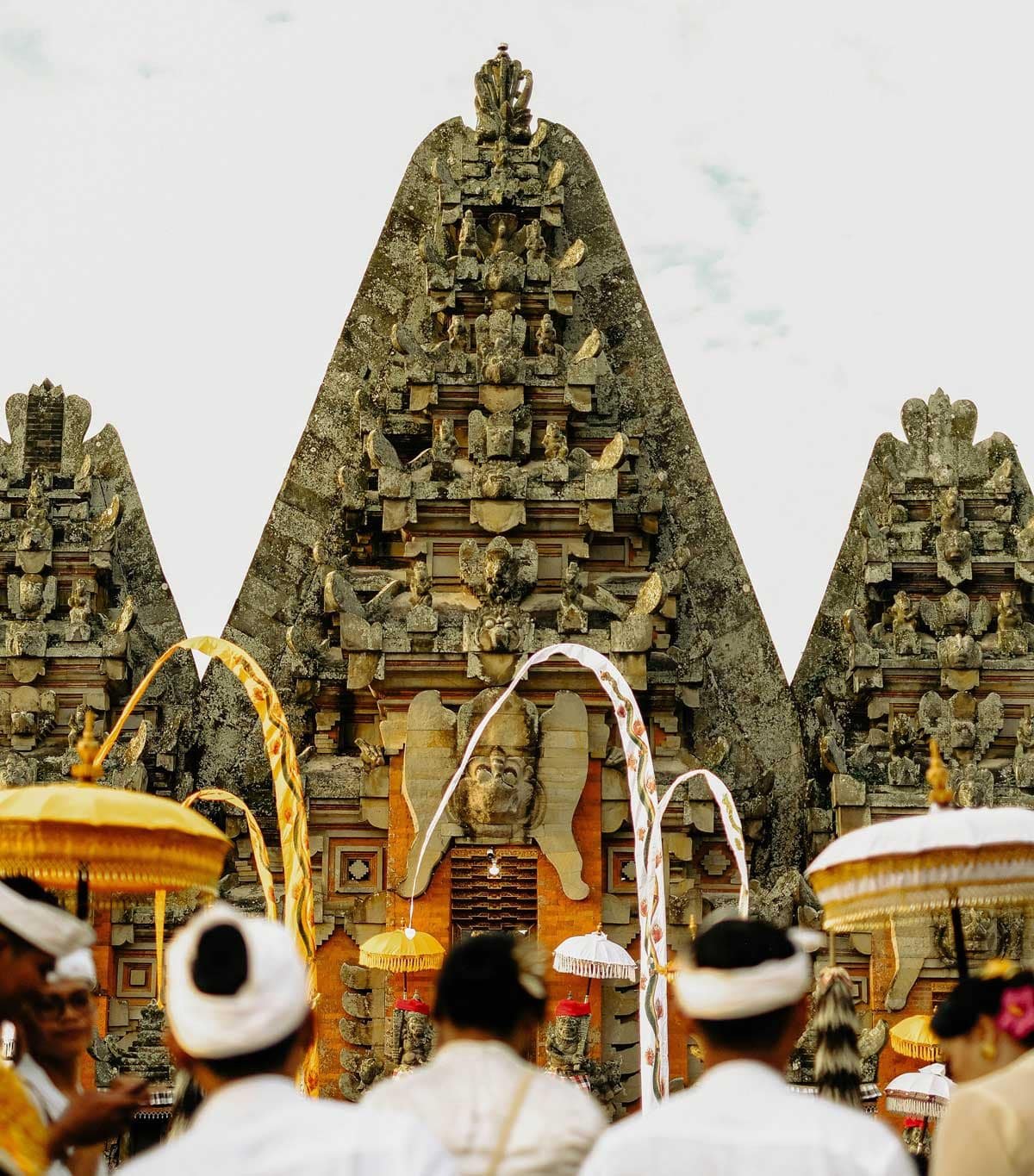
Balinese temples share one architecture, and knowing it makes every visit better. You enter through a candi bentar - the split gate that looks like a tower sliced in half - into the outer courtyard, where daily life happens. A grander roofed gate leads to the middle courtyard, used for preparing ceremonies. The inner courtyard, the jeroan, holds the shrines with their tiered black-thatch roofs - the more tiers, the more important the shrine. Once you can read that sequence, Besakih's scale, Batuan's carvings, and a village temple's charm all make sense as variations on one idea.
The famous temples charge a fixed entrance fee at an official counter - pay there, keep the ticket, and you owe nothing more. Donation boxes inside are genuinely optional. Photography is welcome in the courtyards; skip the flash near anyone praying, keep drones grounded unless you've arranged permission, and treat "no photo" signs as final. And a practical one from experience: at clifftop and forest temples, the monkeys are part of the landscape - zip your belongings away before you start enjoying the view.
It happens more often than you'd think - villa staff, a driver, or a new friend invites you to a temple festival or family ceremony. Say yes; it's a genuine honour, not a sales pitch. Wear the fullest temple dress you can manage (your host will usually lend you what's missing and enjoy dressing you properly), arrive with them rather than alone, sit where they put you, and accept coffee and snacks when offered. You're not expected to pray, donate, or understand the proceedings - just to be present and unhurried. Guests who've done it tend to call it the best thing that happened on their trip.